About Us
PEER Wellness Center is a Recovery Community Center that has been supporting recovery in Boise and the surrounding communities since 2015. The peer-based (non-clinical) programs and services offered support others who live with substance use and/or mental health disorders, the friends and family who love us and to the community at large. In gratitude for our own recovery and fueled by a passion for helping others find their own recovery, we strive to make our community center a place where
isolation becomes inclusion,
problems find solutions, and
strangers become friends.
_edited.png)
Our Vision
The vision of PEER Wellness Center is to create a culture of wellness and positivity that supports long-term recovery for those who face challenges from substance use and/or mental health disorders.
_edited.png)
Our Mission
The mission of PEER Wellness Center is to put a positive face on recovery and reduce the impact of substance use and/or co-occurring mental health disorders in our communities.
We accomplish this by:
-
cultivating an environment of acceptance and inclusion
-
by linking peers to existing community resources
-
by utilizing the success, skills, and support of staff and volunteers who have lived experience with substance use and/or mental health disorders to deliver peer-led and peer-delivered services, and
-
by being an advocate in our community that educates and reduces the stigma surrounding mental health and substance use issues.
_edited.png)
Our Values
These core values create the conceptual framework and philosophy that enable us to fulfill our purpose:
-
you are in recovery if you say you are
-
support all pathways to recovery
-
recovery meets you where you are at
-
focus on the recovery potential, not the pathology
-
everyone has a strength to share
-
recovery is a gift; expect to pay it forward
-
the path of recovery is life-long
-
ongoing community support is vital to successful outcomes
-
we support the wellness of the full person
_edited.png)
HOURS OF OPERATION
Friendly Staff are available to provide recovery support services during these hours:

MON:10A-6P TUE:10A-6P WED:11A-7P THU:11A-7P FRI:10A-6P
*Please note: Some support groups meet outside of normal business hours. Refer to the current Meeting Schedule
HELP IS ALWAYS AVAILABLE
24/7 365 days a year
For immediate assistance outside of our normal operating hours, please reach out to our friends at "9-8-8"
or go to the Clarvida Crisis Center.
Clarvida Community Crisis Center (Boise)
-
Business: 833.527.4747
-
Fax: 208.375.9949
What does "recovery" mean to you?
"Hope, the belief that these challenges and conditions can be overcome, is the foundation of recovery."
Source: SAMHSA - Guiding Principles of Recovery
We are not here to define your Recovery. We never will. To do so would go against the evidence-based and nationally recognized Core Principles and Values of a Recovery Community Organization (RCO). But having the designation of "RCO" seems to imply that we must know what "recovery" is, doesn't it? How can we legitimately call ourselves a "recovery community organization" if we can't even tell you what "recovery" is?
Trying to explain to someone that "my recovery is whatever I say it is" or "their recovery is whatever they says it is" has not always gone over very well. (OK. I a pretty sure it has never gone over well, nor has it ever been well received - or understood.) Thanks to SAMHSA (the Substance Abuse and Mental Health Services Administration) this particular dilemma has been resolved and can be avoided by all of us going forward.
SAMHSA created a "think tank" of industry leaders and subject-matter experts and tasked them with "defining recovery". And that is how the "Working Definition of Recovery" came to be. You might notice that nowhere in their definition of "recovery" are drugs or alcohol mentioned. Likewise, this definition of recovery doesn't include one single "label", negative stero-type or even a diagnosis from the DSM-V.
At the end of the day, this definition of recovery is less about "where we have been" or what situation, substance or event became a negative issue in our lives, and more about "where am I trying to go?"
As people in recovery ourselves, this definition of "recovery" is what a Recovery Community is all about and why PEER Wellness Center has adopted this definition, as well. "Where we have been" is as varied as the number of people that are in recovery. And, irrelevant. Because what we have in common is "where we are going". And that common ground is at the root of "community".
Most importantly, how YOU define your recovery is, and should be, completely up to you. How you approach that "process of change" and what "health and wellness" means to you is what matters.
Your life. Your recovery. Your way.
Evidence shows that the process of recovery is highly personal and occurs via many pathways. Your recovery should reflect and build on your strengths, talents, coping abilities, resources, and inherent values. It should be holistic, address you as a whole person, include your community, and is much easier to navigate if you are supported by your peers, friends, and family members.
Whether you choose:
-
clinical treatment (in-patient or out-patient),
-
no treatment,
-
just detox/withdrawal management
-
a new hobby,
-
medications,
-
individual therapy or group counseling,
-
trauma therapy,
-
explore Faith-Based/Agnostic/Aethiest/Secular/Buddist/Spiritual /Anonymous/Physically Acitve/SMART/Abstenent/California-Sober/Moderation/Sober-Curious/Natural Focused Programs,
-
include peer-support, family support, self-care, or
-
None Of The Above
- the long-term success that you achieve in your recovery will greatly depend on your "ownership" and a recovery support system that empowers you, honors your autonomy and respects your right to make informed choices.
Just in case you are wondering, the answer is, "No. The staff at PEER didn't just make all this up on our own." The idea of enpowered recovery was borne from what has come to be known as "The Recovery Movement".
Faces and Voices of Recovery (a national advcocacy group for us: the recovery community) utilized our (people in recovery) collective voices to develop and publish what is now referred to as "The Recovery Bill of Rights".
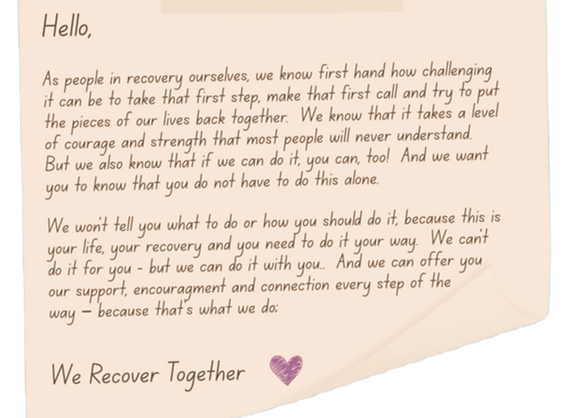
At PEER Wellness Center, it is our expressed goal to actively cultivate a supportive environment
that is condusive to both our individual and collective recovery: a culture where we empower
each other, respect each other and ourselves, honor each other's autonomy and heal.
We hope you will be a part of our recovery at PEER.
There are about as many different definitions of what "recovery" is as there are people who are in recovery. Some believe that recovery only relates to no longer using drugs or alcohol; or no longer using illegal drug(s). One popular belief is that if you have ever developed a substance use disorder to one substance, you must abstain from all substances; complete abstinence or "being sober" is the only recovery that there is. Others include living with a mental health disorder in the definition of recovery while someone else trys to assert that only certain diagnoses "qualify", or that one must have a co-occurring substance use disorder to truly claim that they are "in recovery". Then someone else trys to tell us that if you are taking "any mind altering" medications that one "is not really in recovery". Many of these "philosophies" or "opinions" of what recovery actually is and is not have stood the test of time and have saved millions of lives around the globe. However, some of these beliefs and opinions have cost people their lives. How, you ask? By telling a person who was struggling that there was only one way that their lives would get better, and that if they could not (or assumed that they would not) strictly follow this one way, (whatever "way" that was), that there was no hope for them.
_edited.png)